• Home
  • Radio-Past
    • Project details
    • Research techniques
      • Airborne remote sensing
        • Traditional aerial imaging
        • Helikites and drones
        • NUV and NIR photography
        • LiDAR
      • Field survey
      • Geophysical survey
        • Earth resistance
        • Georadar
        • Magnetometer
        • Magnetic susceptibility
      • Topographical and geomorphological survey
        • Geomorphology
      • Groundtruthing
      • Virtual reconstruction
    • Partners
    • Reference projects
  • Open Lab Ammaia
    • Recent activities
    • History
    • Recent research
      • Aerial survey
        • Aerial photography
        • LiDAR
      • Surface artefact collection
      • Geo-archaeological survey
        • Gold mining
        • Stone quarries
        • Rural landscape
      • Geophysical survey
        • Earth resistance
        • Georadar
        • Magnetometer
        • Magnetic susceptibility
      • Topographical survey
        • Reference system
        • Digital elevation model
      • Field survey
      • Architectural scanning
      • Excavation
        • Trial trenching
        • Thermae excavations
      • Material studies
        • Artefact study
        • Laboratory analyses
      • Virtual reconstruction
    • Mapping the city
    • Archaeological park and museum
    • Bibliography
  • Multimedia
    • 3D-reconstructions
    • Maps and plans
    • Movies
      • RTP Report 1
      • RTP Report 2
    • Panoramic images
    • Photographs
      • Snow in Ammaia!
  • Links
  • Site map
  • Contact
  • Login
Browse: Home / Radio-Past / Research techniques / Geophysical survey / Magnetic susceptibility

Magnetic susceptibility

This method sees the amount to which the soil can be temporarily magnetised by exposing it to a magnetic field. Generally speaking, the more the soil can be magnetised the greater the chance that human occupation has taken place in that location.

This is good for shallow surface sites and for rapid evaluation to see where the areas of archaeological potential are. It is best for thin spreads under 10 centimetres deep but can detect sites at greater depths as archaeological material is often brought to the surface by worm action. It is less good for soils with low iron content. It is mainly used to identify areas for further investigation.

As part of an integrated approach of geophysical survey for archaeological purposes on-site measurements can be taken of the apparent magnetic susceptibility of samples of soil and, if available, ploughed up stone construction material (e.g. with a Kappameter KT–5).
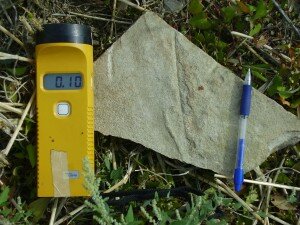

magnetic susceptibility

Search

News


First impressions in "Recent activities"


Interview and photographs in "Recent activities"


Ammaia Report in "O Público"

-->

Copyright © 2010 Radio-Past.

Powered by WordPress and Hybrid. Operated by 7reasons