• Home
  • Radio-Past
    • Project details
    • Research techniques
      • Airborne remote sensing
        • Traditional aerial imaging
        • Helikites and drones
        • NUV and NIR photography
        • LiDAR
      • Field survey
      • Geophysical survey
        • Earth resistance
        • Georadar
        • Magnetometer
        • Magnetic susceptibility
      • Topographical and geomorphological survey
        • Geomorphology
      • Groundtruthing
      • Virtual reconstruction
    • Partners
    • Reference projects
  • Open Lab Ammaia
    • Recent activities
    • History
    • Recent research
      • Aerial survey
        • Aerial photography
        • LiDAR
      • Surface artefact collection
      • Geo-archaeological survey
        • Gold mining
        • Stone quarries
        • Rural landscape
      • Geophysical survey
        • Earth resistance
        • Georadar
        • Magnetometer
        • Magnetic susceptibility
      • Topographical survey
        • Reference system
        • Digital elevation model
      • Field survey
      • Architectural scanning
      • Excavation
        • Trial trenching
        • Thermae excavations
      • Material studies
        • Artefact study
        • Laboratory analyses
      • Virtual reconstruction
    • Mapping the city
    • Archaeological park and museum
    • Bibliography
  • Multimedia
    • 3D-reconstructions
    • Maps and plans
    • Movies
      • RTP Report 1
      • RTP Report 2
    • Panoramic images
    • Photographs
      • Snow in Ammaia!
  • Links
  • Site map
  • Contact
  • Login
Browse: Home / Radio-Past / Research techniques / Virtual reconstruction

Virtual reconstruction

Over the past decade, the usage of modern medias for illustrating archaeological results has become fashioned due to its ability to sketch-out the results of discussions on reconstructions and presenting them to a broad public effectively.

The aim for the 3D-reconstruction of Ammaia goes beyond the pure picture’s, static presentation of such a site by taking a story into account, which should attract the interest of our audience through implementation of characterized protagonists and believable, accurate 3d scenery, putting the archaeological finds and results into a larger context.

The work implemented in such a project cover the manual 3D- modeling of building structures, generation of large, detailed terrains and character animation. The creation of such 3D-scenes involve a intense research taking all available information and references into account which at the end have to stand the scientific critics and discussion.

The experiences of all project-members should lead to new approaches to modeling and digitalization techniques as well as the interdisciplinary exchange of these. A scientist able to sketch out his ideas to a simple 3D- model can output his theory of reconstruction for communication and discussions more precisely which can possibly lead to a better understanding of the investigated sites using non invasive methods.
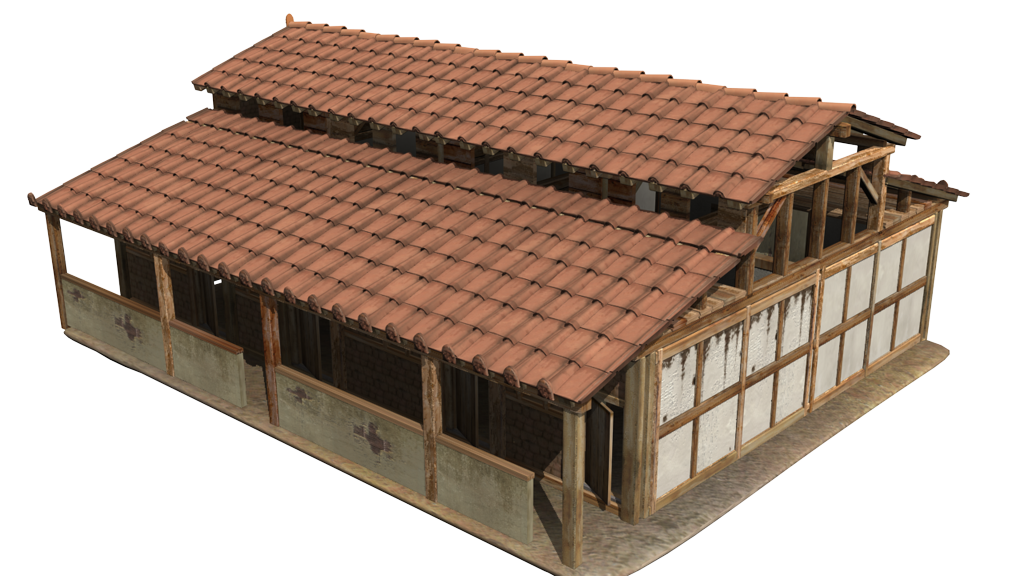
Reconstruction of a Roman building from Vindobona (by 7Reasons)

Reconstruction of a Roman building from Vindobona (by 7Reasons)

For over a decade we have been working on various archaeological 3d reconstructions throughout Europe but now for the first time have the chance to implement these experiences to a non-excavated site, using the non -invasive prospective methods of our partners in this project which will certainly lead to new knowledge in the fields of archaeological documentary film.


Search

News


First impressions in "Recent activities"


Interview and photographs in "Recent activities"


Ammaia Report in "O Público"

-->

Copyright © 2010 Radio-Past.

Powered by WordPress and Hybrid. Operated by 7reasons
